Effective Strategies for Generating HVAC Leads
Is your phone a little too quiet for a Tuesday morning? For any HVAC business owner, a silent phone is a stressful sound. You know you do great work, but waiting for word-of-mouth referrals to fill your schedule can feel like a guessing game, leaving your revenue up to chance.
The solution is to create a more predictable flow of work by generating "leads." A lead is simply a potential customer who has shown interest and given you a way to contact them. For example, when a homeowner named Sarah discovers her AC isn't blowing cold and fills out the "Request a Quote" form on your website, her name and phone number become a valuable lead—an opportunity to earn a new customer.
While referrals are fantastic, relying on them alone means you're not in control. A competitor who actively seeks out new opportunities will capture the homeowners who don't have a ready recommendation. Building a system for generating your own heating and cooling leads puts you in the driver's seat of your business growth.
This isn't a complex marketing mystery. You're an expert at fixing furnaces and air conditioners, not at digital advertising, and that's perfectly fine. This guide offers simple, practical steps to get more furnace repair calls and keep your schedule full, turning that quiet phone into your most powerful tool.
Your Most Important Free Ad: Mastering Your Google Business Profile
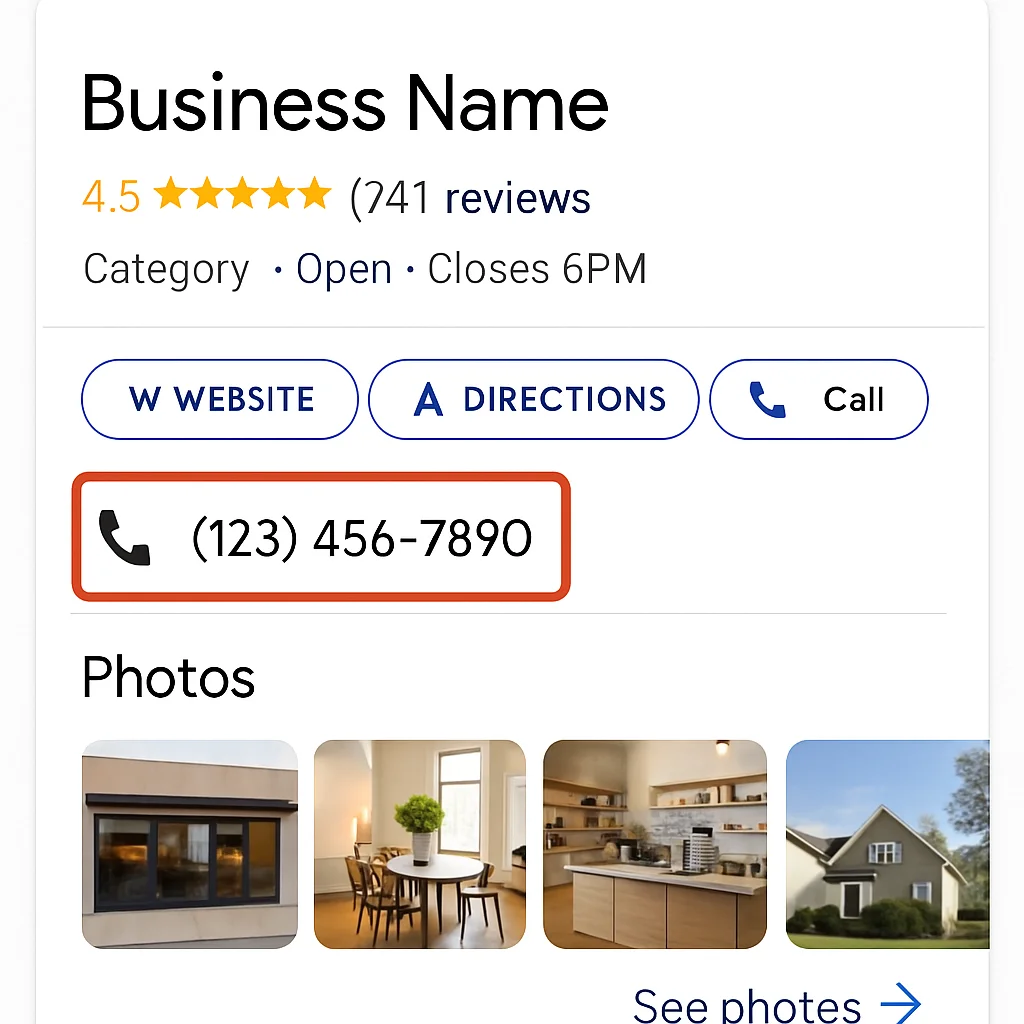
When a homeowner's AC dies on a hot July afternoon, their first move is to search "AC repair near me" on their phone. The businesses that show up in the map box at the top of Google get the first shot at that job. This powerful placement is controlled by your Google Business Profile (GBP)—your single most important piece of free advertising. Mastering it is the foundation of any local SEO strategy, putting you directly in front of customers at the exact moment they need help.
Getting your profile in top shape is easier than you think. A complete profile helps Google understand what you do and where you do it, and it gives potential customers the confidence to call you. Here's a quick checklist for an optimized profile:
- Correct Name, Address, Phone (NAP): Make sure it's accurate and consistent everywhere online.
- Add Service Areas: List the specific counties, cities, or neighborhoods you serve.
- Select HVAC Categories: Choose all relevant options, like "Air conditioning contractor" and "Furnace repair service."
- Upload Real Photos: Show off your branded trucks, your uniformed team, and your quality work.
Finally, reviews are the fuel that makes your profile run. After you complete a job, simply asking a happy customer, "Would you mind leaving us a review on Google?" can make a massive difference. When a potential customer sees a profile with 45 positive reviews next to one with only two, the choice is easy. Positive reviews build instant trust and are often the deciding factor for who gets the call.
Does Your Website Turn Visitors Into Callers?
Your Google Profile often gets a homeowner to click, but your website's job is to make them call. Think of your site as the first step in your sales funnel; it must turn a curious visitor into a real lead. The single most critical element for this is your phone number. It should be large, unmissable, and at the very top of every page. On a mobile phone, it must be clickable so a customer with a broken furnace can reach you with a single tap.
Not everyone visits your site during business hours. A simple "Request Service" or "Get a Quote" form acts as your 24/7 receptionist, giving potential customers a way to take action at 10 p.m. on a Sunday. By asking for just a name, phone number, and a brief note about their issue, you can start your Monday with new opportunities already in your inbox.
Finally, once a visitor knows how to contact you, they need to feel confident why they should. Build that confidence by being specific. Instead of a vague "HVAC Services" heading, list out exactly what you do: "Emergency AC Repair," "New Furnace Installation," "Ductless Mini-Split Maintenance." When a potential customer sees the exact term they were searching for, it confirms you are the right expert for the job.
Getting Found on Google: The Library Analogy for SEO vs. PPC
Now that your website is ready to turn visitors into customers, the next challenge is getting people to find it. When a homeowner needs service, they go straight to Google. To get their business, you need to show up on that results page. Think of Google as a giant library where your website is a book. There are two fundamental ways to get your book in front of eager readers.
The first approach, Search Engine Optimization (SEO), is like organizing your book so perfectly that the librarian (Google) naturally recommends it to anyone looking for that topic. It involves making your site trustworthy, fast, and full of helpful information. This approach takes time to build authority, but the results are powerful and lasting because you don't pay for each click.
On the other hand, what if you need calls today? That's where Pay-Per-Click (PPC) advertising comes in. Using the library analogy, PPC is like paying to have your book placed on the "Featured" display right at the entrance. You get immediate visibility for specific searches like "emergency furnace repair." This is what Google ads for HVAC contractors do, driving immediate traffic, though you pay every time someone clicks on your ad.
These two methods—SEO and PPC—form the core of getting found online. SEO is the long-term marathon that builds free traffic and trust, while PPC is the immediate sprint that can fill your schedule during a heatwave. Many successful businesses use a mix of both, but the best place to start building a sustainable asset is with the "free" side.
Your Digital Storefront: Winning with Local SEO
When a homeowner's furnace gives out on a cold night, they don't just Google "HVAC services." They search for a specific solution, like "furnace repair in Dallas." To win that customer, your website needs to prove to Google you're the perfect match. A strong local SEO strategy starts with creating individual pages for each service you offer. Instead of one generic page listing everything, have a dedicated page for "AC Repair," another for "Furnace Installation," and one for "Duct Cleaning." This simple step makes it crystal clear to both customers and Google exactly what you do.
Taking this one step further is what separates the busy companies from the quiet ones. For every service you offer, create a page for each major town or neighborhood you serve. A page titled "AC Repair in Plano" directly targets homeowners in that city, making you far more likely to appear in their search results. This strategy costs you nothing but time and directly answers the question your potential customers are asking.
Good website content isn't about being a marketing genius; it's about being helpful. By creating these specific service and location pages, you're simply making it easier for customers to find you. This strategy builds a powerful, long-term asset that brings in leads around the clock.
The 'Fast' Way to Get Calls: A Guide to Google Local Service Ads
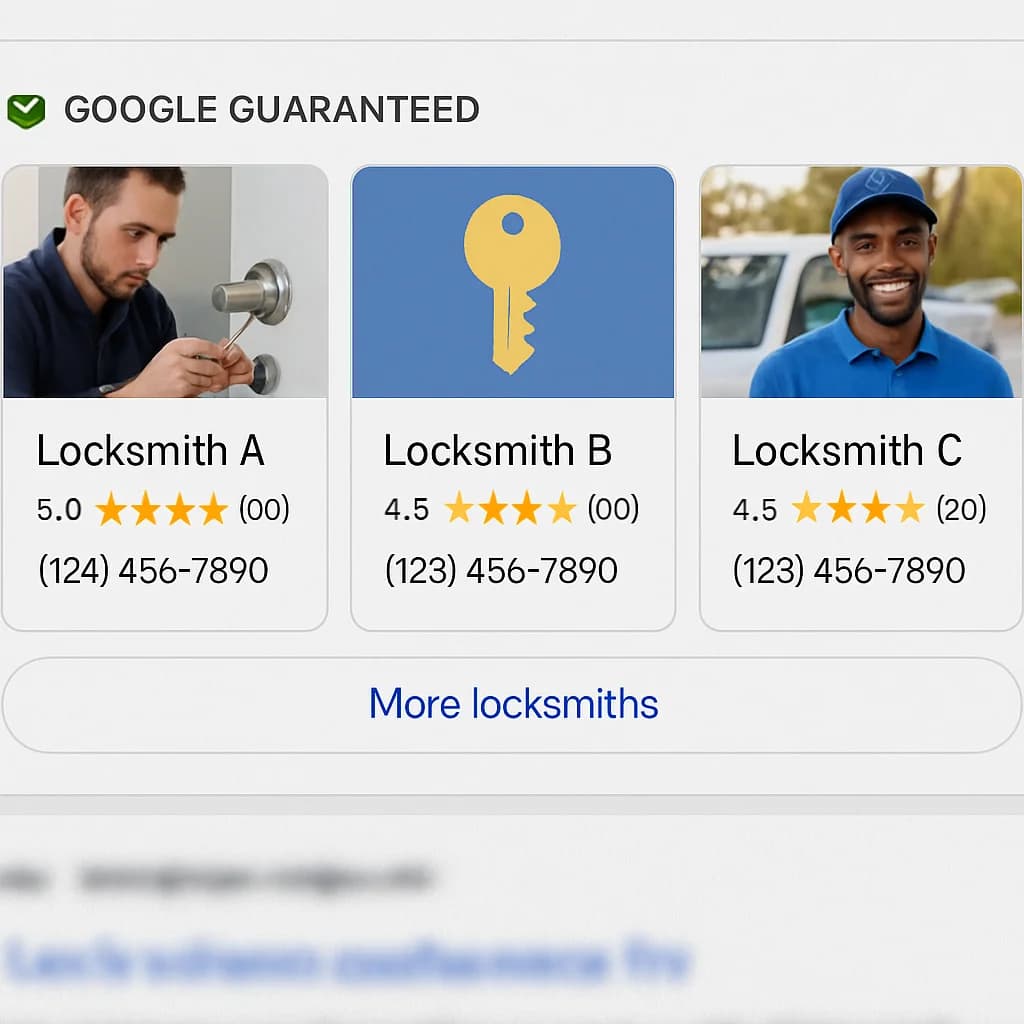
For those times you need the phone to ring now, Google offers a powerful tool designed specifically for local service businesses like yours: Local Service Ads (LSAs). You've definitely seen them—they are the profile boxes that appear at the very top of the search results, even above the regular ads. What makes them stand out is the green checkmark next to the words "Google Guaranteed." This badge instantly tells a potential customer that Google has background-checked and vetted your business, giving them the confidence to call you.
The biggest difference is how you pay. With traditional Google Ads, you pay every time someone clicks, whether they call you or not. This can get expensive fast. LSAs work on a pay-per-lead model, which is much more budget-friendly. This means you only pay when a legitimate potential customer calls you directly through the ad to inquire about a service you offer. You essentially get to buy qualified HVAC appointments without wasting money on tire-kickers or accidental clicks.
This direct-to-call format makes LSAs one of the most effective sources for air conditioner installation leads, capturing homeowners who are ready to make a decision. You are connecting with people at the exact moment they need help, with a stamp of approval from Google itself. This model is powerful, and Google isn't the only company that uses it.
Should You Buy Leads? The Truth About Angi and Thumbtack
The pay-per-lead model is just one piece of a much larger puzzle. You've likely heard of the major players in this space: companies like Angi (formerly Angie's List) and Thumbtack. These services are essentially massive digital marketplaces. Homeowners go there to post a job—like "broken furnace" or "need new AC quote"—and the service then sells that job information as a lead to qualified local contractors like you.
For a new business or a slow week, the appeal is undeniable. Signing up can feel like instantly turning on a faucet for potential jobs. Instead of waiting for the phone to ring, you get a steady stream of notifications about homeowners in your area who need help now. This can be the fastest way to build an initial customer base and generate immediate cash flow.
However, there's a catch that often frustrates business owners. When you get a lead from these services, you are rarely the only one. The same lead is often sold to three, four, or even more of your local competitors at the exact same time. This creates a frantic race to be the first to call the homeowner, and it can turn into a battle over price before you've even had a chance to demonstrate your quality.
These services can be a powerful tool for filling gaps in your schedule, but relying on them entirely can become an expensive, high-competition grind. The real game-changer is understanding the quality of the leads you're buying.
Exclusive vs. Shared Leads: Why Paying More Can Save You Money
Understanding the difference between exclusive vs. shared HVAC leads is the single most important factor in making paid lead services work for you. A shared lead, the most common type, is sold to you and several competitors simultaneously. It's a race. An exclusive lead, however, is sold only to you. Think of it as the difference between competing in a 100-yard dash against four other runners for one prize versus being handed the prize directly.
Here's where the math gets interesting. A shared lead might seem cheaper upfront, but your chances of winning the job are much lower. You might need to buy five or more shared leads just to land one project. An exclusive lead costs more, but your closing rate will be significantly higher. Often, the true cost to acquire a new customer ends up being lower with exclusive leads, saving you time, frustration, and money. The conversation about a good cost per HVAC lead should always focus on the final cost per booked job, not the initial cost per name and number.
Before you ever sign up with a lead generation service, protect your investment by asking two simple questions:
- "Is this lead sent exclusively to me, or to other contractors as well?"
- "What is your refund policy for bad leads (e.g., wrong number, person already hired someone)?"
Their answers will tell you everything you need to know about the quality you can expect. While paid services offer speed, generating your own exclusive leads gives you ultimate control.
A Smart Way to Use Facebook for Your HVAC Business
Many business owners get frustrated with Facebook because it rarely brings in emergency repair calls. Unlike someone searching on Google with a broken furnace, people scrolling through Facebook aren't usually looking to buy right now. That's precisely why it's a great long-term marketing tool. Its real power isn't in generating immediate sales; it's in building local trust and familiarity over time.
Think of it as becoming a local celebrity. When homeowners in your service area see your company's trucks, helpful tips, and friendly faces in their feed, they start to recognize your brand. This creates what marketers call Top-of-Mind Awareness. So, when their AC unit finally does quit, your company is the first one they think to call. You aren't just a random name on a list; you're the familiar, trusted expert.
This doesn't have to be complicated. You can build this trust with simple, helpful posts that provide value first:
- Show Your Work: Post a picture of your team (with the homeowner's permission!) after a successful new unit installation.
- Share a Quick Tip: A post like, "Clogged filter? Here's a 60-second fix to improve airflow before you call for service."
- Give Seasonal Reminders: "Fall is here! Schedule your furnace tune-up now to avoid the winter rush and stay warm all season."
While running Facebook ads for HVAC contractors can amplify this effect, consistently posting helpful content builds a priceless foundation of community trust.
What Is a Good Cost Per HVAC Lead (And How to Figure Yours Out)
Knowing whether your marketing is profitable starts with one simple number: your Cost Per Lead (CPL). This just tells you what you're paying for each potential customer opportunity. Understanding this figure is how you stop guessing and start knowing if your advertising dollars are working.
Figuring out your CPL is straightforward. Take your total marketing spend for a period and divide it by the number of leads you received. For example, if you spent $500 on ads in a month and got 10 phone calls, your CPL is $50. This single number gives you a baseline to measure all your efforts against.
So, what is a good cost per HVAC lead? It depends on quality. A shared lead from a service where you compete with others might cost $25-$75. In contrast, an exclusive call for a new system installation—a much more valuable job—could be $150 to $300+. The key isn't just a low CPL, but paying a price that makes sense for the potential profit of the job.
A "good" CPL is one that leaves you with a healthy profit. A $300 lead for a $10,000 furnace installation is a fantastic investment, while a $50 lead for a minor repair that barely covers your costs isn't. Tracking this number helps you cut what isn't working and double down on what is.
Your 3-Step Plan to Get More HVAC Leads This Month
You now have a blueprint for how a homeowner's urgent Google search becomes your ringing phone. You can trade uncertainty for a clear map that leads directly to your next customer.
Start simple and build momentum. Instead of trying to do everything at once, focus on this proven, step-by-step plan to start generating heating and cooling leads right away:
- This Week: Claim and completely fill out your free Google Business Profile. Start asking every happy customer for a review.
- This Month: Make sure your website has a click-to-call phone number at the top and a simple contact form.
- Next 90 Days: Choose ONE other strategy from this guide—either a simple local SEO page or a small budget for Google Local Service Ads. Track the calls you get.
Following these steps is about taking control and building a predictable, less stressful business with a fuller schedule. You're the expert when you arrive on the job—and now you have the tools to be the expert in getting there, too.